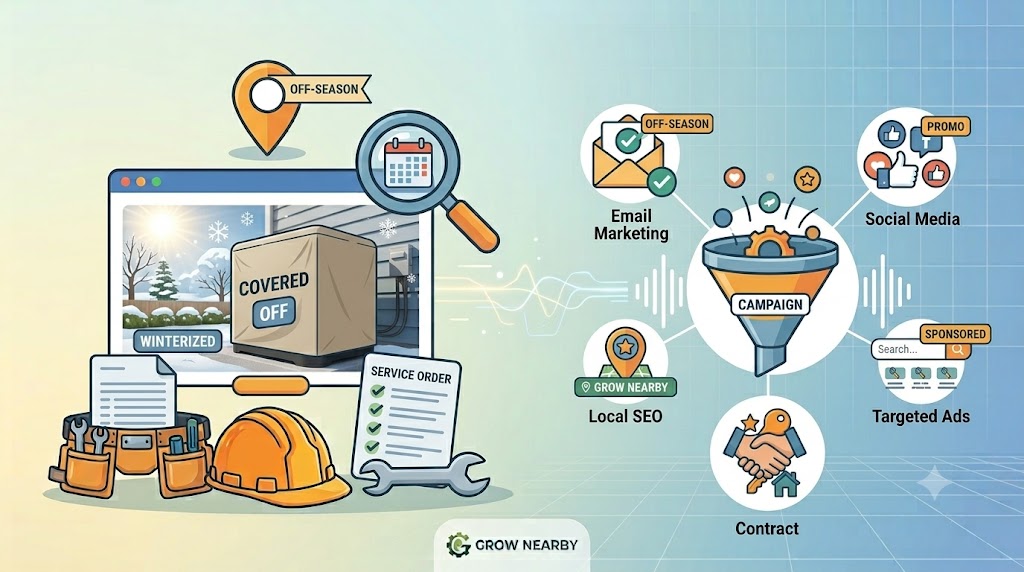




The phone goes quiet. Every HVAC contractor knows that particular kind of quiet, the one that shows up right between the big seasons. Trucks are ready. Crew’s trained. The calls just aren’t landing the way they did last month. That’s usually when owners start looking into HVAC shoulder season marketing, because waiting on the weather to fix things isn’t really a plan. A well-timed email, a short social post, or even a text to an old customer can turn a dead week into a working one.
Proactive Lead Generation Tactics for Contractor In-Between Months
1. Why the Slow Months Hit the Schedule Hard
A truck parked in the lot on a slow Tuesday in April isn’t earning its keep. Payroll still runs. So does insurance. So does the lease, even when the phone stays dead silent. Plenty of owners treat spring and fall like a built-in break from marketing, then wonder why summer turns into a scramble instead of a head start. Here’s the real problem: it’s not that people stop needing HVAC work between seasons. It’s that they stop hearing from their contractor right when they’d actually consider booking a repair. A furnace that ran fine all winter? Forgotten by April. Staying in front of homeowners during that stretch keeps a crew from standing around. Breaking out of this predictable cycle requires a dedicated approach to HVAC marketing that builds an automated queue of maintenance requests before weather shifts affect your cash flow.
2. Reminders That Bring Past Customers Back
Nobody thinks about their HVAC system until it stops working. That’s just how it goes. A simple email to past customers, sent right before the weather turns, reminds them that a short check now beats an emergency call later. Contractors who want to book more HVAC tune-ups during these stretches should keep it short and give people one clear reason to act, such as being first in line before the busy season hits. Text messages work just as well for customers who never open their inbox. One good message to the right group of past clients can fill several open slots on the calendar.
3. Simple Ways to Stay Visible This Fall
Fall HVAC marketing ideas don’t have to come from a big team or a fancy strategy. Most just require a little planning ahead of time and the willingness to show up consistently, not just when things go quiet.
- Post a short video showing homeowners how to perform a maintenance check they can actually do themselves.
- Snap a before-and-after photo of a dirty filter next to a clean one.
- Run a countdown to the first cold morning of the year.
- Ask happy customers for a short review right after a fall visit.
- Send a friendly text reminder before the weather turns.
4. Getting Found When a Furnace Breaks Down
A furnace makes a strange clunking noise late at night, and the homeowner reaches for their phone, not an address book. Whoever shows up first in that search usually wins the call. A page built specifically around furnace repair SEO, one that actually answers real homeowner questions, tends to rank ahead of a generic services page that sounds just like every competitor’s.
That means writing about real problems, a furnace that won’t start, a burning smell from the vents, instead of vague marketing language nobody actually types into Google. Keeping business hours and reviews up to date matters here too. None of this happens overnight. The work has to start well before the first freeze, not the night someone’s furnace finally quits. To make sure your company is the first name that shows up in those frantic midnight moments, deploying tactical local SEO for HVAC service ensures your emergency landing pages are perfectly indexed for nearby neighborhoods.
5. Small Habits That Keep Customers Loyal
Winning a job once? Easy. Getting that same homeowner to call back next season is the hard part, and it usually comes down to a handful of small habits repeated over and over, not one clever campaign.
- Send a simple reminder before each season change begins.
- Ask for referrals right after a job goes well, while it’s still fresh in their mind.
- Keep a running note of who was serviced and when, so nobody slips through the cracks.
- Follow up a year after a big repair just to check in.
- Send repeat customers a short, personal thank-you note.
None of this works as a one-time push, and it never really did. The contractors who keep their schedule full between seasons treat marketing like a habit, not a fire drill they run once business slows down. A short email here. A fall post there. A service page that gets a little attention every few months. It adds up. Slow months don’t have to mean slow work, not if the outreach never actually stops. The crew stays busy instead of sitting around, waiting for the weather to make the call for them. While building long-term customer habits takes time, you can quickly plug immediate schedule gaps during off-months by running hyper-targeted Google Ads and local lead generation campaigns to capture instant visibility.
The quiet weeks don’t have to stay quiet. Grow Nearby helps home service businesses get found online, attract better leads, and keep the calendar full. Ready for steady growth? Call us at 813-412-5196 today and start turning more searches into booked jobs.
FAQs
Q1: How soon before the season changes should a contractor start reaching out to past customers?
Most contractors see the best response when they reach out two to three weeks before the weather actually shifts. Wait until the first cold or hot day, and it’s a fight for attention with every other contractor doing the same thing at the same time.
Q2: What kind of content works best for a service business during a slower time of year?
Short, practical content tends to perform best, things like a simple maintenance tip or a seasonal reminder. It doesn’t need to be complicated, just consistent enough that homeowners see it before they actually need it.
Q3: Why do some HVAC businesses show up first when someone searches for help at night?
It usually comes down to how well a website answers the specific question someone’s searching for in that moment. A page built around a real problem, kept up to date, and backed by real reviews tends to rank ahead of a generic page that tries to cover everything at once.