



Homeowners toss your flyer the second it hits the counter. A voice, though? That sticks. When someone hears you explain why their AC keeps freezing up, week after week, you stop being a stranger with a truck. That is the real reason to learn: how to start a contractor podcast, and the good news is the setup is simpler than you’d think. You don’t need a studio. Just a few tools and something worth saying. Most contractors already have the second part covered without knowing it. Every job you finish leaves you with a story or a lesson a homeowner would love to hear. Here are the five tools that get you on the air.
The Five Essential Tools to Build Trade Industry Authority
1. Start With The Microphone
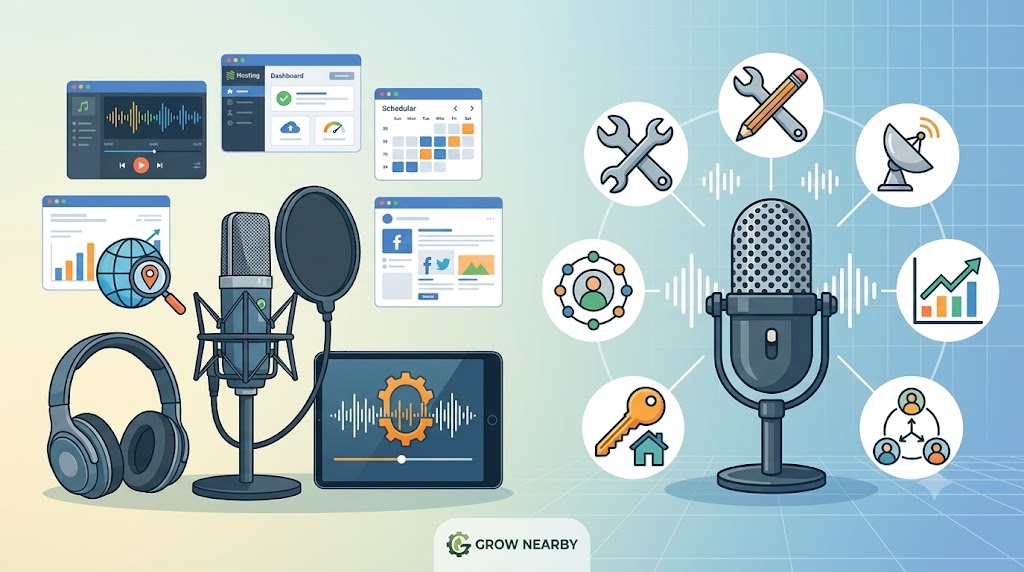
This is the one spot you can’t cut corners. Folks will sit through a dull topic. They will bail on audio that sounds like a tin can. A simple dynamic USB mic like the Shure MV7 or the Samson Q2U plugs right into your laptop and blocks out the racket of a garage or a busy shop. Get close to it, talk like you would to a customer standing in their driveway, and you already sound like a pro. Honestly, most good podcast gear for business begins and ends with the mic on your desk. Nail that, and everything after it gets easier. Skip it, and no amount of editing later can save you. A mic is the one thing your whole show leans on, so it earns the first spot. Securing high-quality audio is the foundation of building local trust, much like aligning your entire business under an interconnected blueprint for home service marketing to capture every nearby lead.
2. Clean It Up In Editing
Recording? That’s the easy part. The magic is in trimming the mess out. Most polished home service podcasts got that way with a bit of cleanup, not with some fancy studio. Here is what to grab:
- Descript, which turns your audio into text so you can delete a stumble the same way you delete a typo.
- Audacity, free and a little clunky, but it does the job once you get the hang of it.
- A short, familiar intro so every episode opens the same friendly way.
- The delete key is used a lot, on every long pause and every “um.”
None of this takes special talent. It just takes twenty honest minutes and a willingness to cut yourself off. The goal is not perfect. The goal is clean enough that a listener stays till the end. Trim the dead air, drop your intro on top, and you sound like a shop that has its act together.
3. Get It Hosted Everywhere
A finished file just sitting on your laptop helps nobody. So you need a host. Think of it as the spot that takes your episode and drops it onto Apple Podcasts, Spotify, and every app your customers already thumb through at night. Buzzsprout and Podbean are both easy to set up and show you the numbers that actually mean something, like who finished listening and who bailed early. This is the part of trade industry podcasting that turns a fun side project into a steady stream of calls, because a show nobody can find is a show nobody hears. The host handles the boring tech side so you never have to think about it. Upload it once, and it spreads on its own while you’re out on a job. That set-it-and-forget-it part is the whole appeal. You do the work one time, and the host keeps handing your voice to fresh ears for months.
4. Record Guests From Anywhere
Bringing on a guest makes your show ten times better. The local inspector. A supplier you trust. Another contractor with a few war stories. You just don’t want to drive clear across town, load in gear, and set up a room to make it happen. Tools like Riverside and Zencastr handle that for you:
- Each person records on their own end, so a shaky video call never wrecks the sound.
- Everybody stays in their own office and just hits record.
- The tracks stitch back together clean, like you were sitting at the same table.
- No commute, which means you’ll actually book the interview instead of putting it off forever.
The easier it is to make the next episode, the more likely you are to keep going. Guests keep that calendar full, and they bring their own audience along with them. Somebody they know hears your name for the first time. That is a lead you never had to chase. Leveraging your show notes, guest transcripts, and episode landing pages is also an incredibly effective way to fuel your ongoing campaign for local SEO services to dominate nearby search terms.
5. Wear Good Headphones
This one always gets skipped. Big mistake. You can’t fix a problem you never heard in the first place. Basic earbuds hide the hum of a furnace or the buzz of a bad cable, and you find out too late, right after you post. A pair of closed-back headphones like the Audio-Technica M50x lets you catch all that while you record. Slip them on, and you hear your own voice the way your listeners will. You catch the mistakes while you can still redo the take. It’s the least exciting tool on this run and the one that quietly saves every single episode. Your ears are the last checkpoint before the whole internet gets a listen.
So there it is. A solid mic, a little editing, a host that puts you everywhere, a way to bring on guests, and headphones that keep you honest. That’s the whole setup. No studio, no engineer, no excuses. The contractors who stay top of mind in their town are simply the ones showing up every week, talking straight, and answering the questions everyone else dodges. Grab the gear, hit record, and let folks get to know the person behind the truck. Do that for a few months, and your name starts coming up first. Then it snowballs, one honest episode at a time. Steady beats flashy in this game, every single time.
You’ve got the mic, the message, and plenty of stories worth telling. Now let’s make sure the right people actually hear them. Grow Nearby helps contractors turn a weekly show into steady local jobs and a name folks trust first. Call us now at 813-412-5196.
FAQs
Q1: How much of my time does a weekly show take?
Once you find a rhythm, an episode runs about an hour or two from record to upload. The first few feel slow and awkward. After that, it becomes second nature, like any job you’ve done a hundred times.
Q2: What should I even talk about?
Start with the questions customers ask you on every single estimate. The stuff you already explain in driveways all day. If a homeowner wonders about it, it makes a solid episode because you’re the one with the answer.
Q3: How do I get people to actually listen?
Tell one real story per episode and keep it short. Word of mouth does the rest once folks realize you’re the friendly face who breaks things down without the sales pitch.