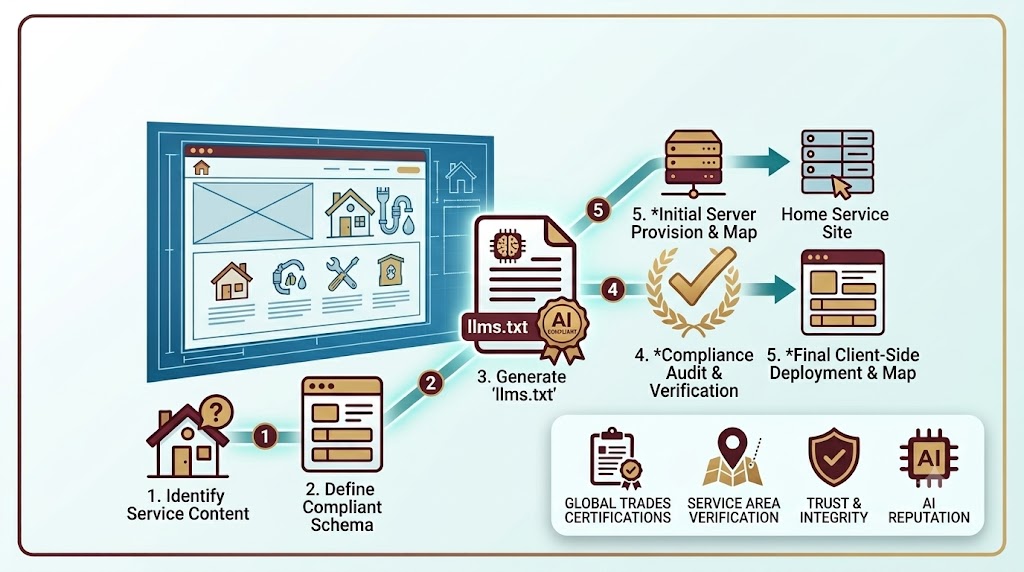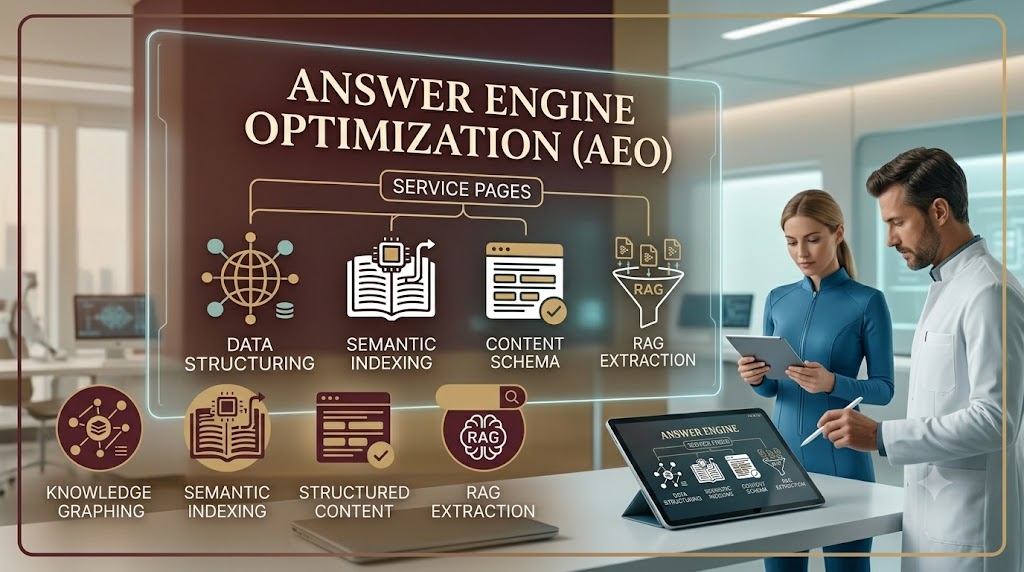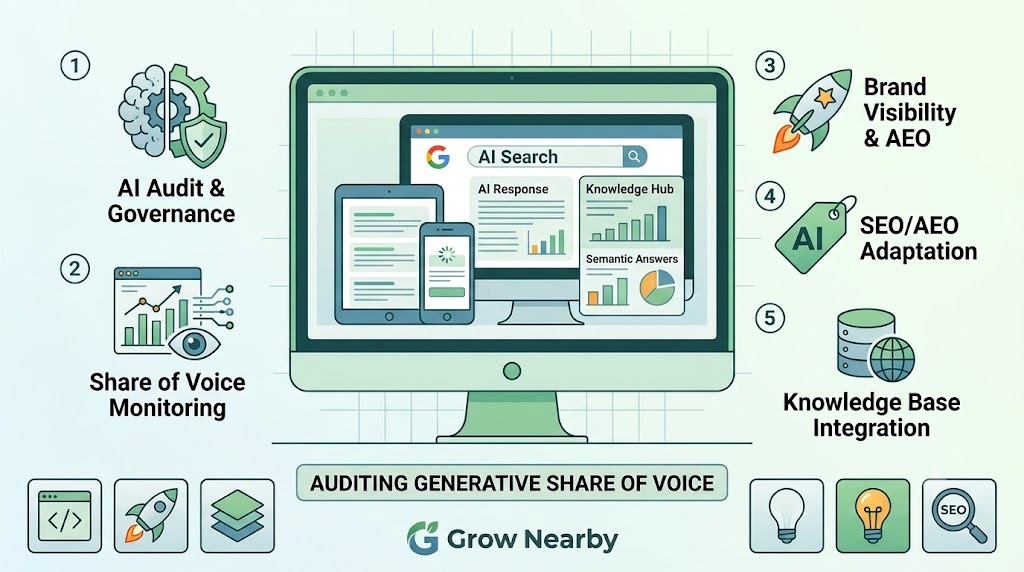




AI chatbots are reading home service websites now, not just crawling them for a search index. Understanding llms.txt for local businesses matters because this new file gives AI systems a clear, structured way to understand what a business actually offers, without scraping and guessing at page content. Think of it like an instruction file, similar to robots.txt, but built for language models instead of search bots. Most home service sites don’t have one yet. Most contractors haven’t even heard the term. That’s a real opening for a business willing to move first. This guide walks through exactly how to build, format, and deploy a compliant llms.txt file step by step, start to finish. No fluff, no theory.
The Practical Blueprint for Constructing and Validating Language Model Text Directories
Deploying a clear, machine-readable text asset allows contractors to explicitly define their operational footprints for modern AI crawlers instead of relying on unverified website scrapes. Below, we break down the process step by step through the following implementation pointers.
What an llms.txt File Actually Does
An llms.txt file sits at the root of a domain and gives AI systems a plain-language summary of what a business does, where it operates, and which pages matter most. It’s not a ranking factor in the traditional sense. Not yet, anyway. But it does something search engines never offered: a direct line to tell an AI model what’s true about a business instead of hoping it infers correctly from scattered pages.
No indirect signals, no crossed fingers. Sites without one leave that interpretation entirely up to the model. That’s a risky bet when the model gets a service area or a specialty wrong. And it will happen, sooner or later, if nothing tells it otherwise. A plumbing company that stopped offering water heater installs two years ago doesn’t want an AI model still confidently recommending them for it. This file exists to close exactly that gap. Consider it cheap insurance against a model confidently getting basic facts wrong to a potential customer. Are language models scraping bad facts about your cooling services? Future-proof your technical authority using data-driven HVAC Organic Search Optimization
Deciding What Content Belongs in the File
Before writing a single line, figure out what actually deserves a spot in the file. This isn’t a copy-paste job from the homepage. It’s a distillation, the shortest possible version of what matters most.
Start with these categories:
- Core services: List each major service clearly, not buried in marketing language.
- Service area: Name the actual cities and regions covered, not a vague radius.
- Key pages: Link to the pages an AI model should treat as authoritative, like pricing or FAQ pages.
- Company facts: Licensing, years in business, and anything that establishes legitimacy.
- Contact preferences: Whether phone, form, or chat is the preferred first contact method for a given service.
Getting this part right matters more than the syntax. Anyone figuring out how to build an llms txt file for the first time usually spends more time here than on the actual formatting, and rightly so. That’s fine. It should take longer. Rushing this step just means the file ends up as vague as the website it’s supposed to clarify. Ensure local AI assistants suggest your company accurately during emergencies. Scale your commercial performance with dominant Digital marketing service for plumbers
Formatting Rules That Keep the File Valid
The file uses Markdown, not JSON or XML. Keep it simple. A clear H1 with the business name, then a short description, then organized sections with links and brief explanations underneath. Getting the ai crawler website configuration right here mostly means avoiding clutter, since bloated files with excessive detail get parsed poorly or ignored outright. Less is more in this case, plain and simple. Stick to plain sentences. Skip the jargon. A file that reads like it was written for a person, not stuffed with keywords, tends to get interpreted more accurately by the models actually reading it. Nested bullet points and long tables tend to confuse the parsing more than they help. Simple wins here, every time. Resist the urge to add every possible detail just because there’s room for it. Configure a clean website footprint that bots can easily read. Upgrade your platform today with responsive Electrician Website Design and Development.
Testing and Verifying Crawler Access
Once the file’s live at the domain root, don’t just assume it’s working. Publishing something and walking away is exactly how half these projects quietly fail.
A few checks worth running:
- Confirm the file loads directly: Visiting yourdomain.com/llms.txt should show the raw file, not a 404.
- Check robots.txt doesn’t block it: Some crawler rules accidentally block the exact bots meant to read this file.
- Ask the models directly: Prompting ChatGPT or another assistant about the business is one of the simplest ways to gauge seo for chatgpt visibility improvements after deployment.
- Recheck after a week: Give the models time to actually pick up the new file before assuming it hasn’t worked.
Skipping this step means publishing a file and just hoping it works. That’s not a strategy, that’s a guess with extra steps.
Keeping the File Updated as the Business Changes
A stale llms.txt file is worse than no file at all, since it actively feeds outdated information to a model that trusts it completely. New service areas, updated pricing, seasonal promotions, all of it needs a place in this file eventually. None of it updates itself. That’s the part people forget. Set a quarterly reminder, tie it to whatever schedule already handles schema updates or Google Business Profile changes. Businesses expanding into a new city or adding a new service line should treat the file as a required part of that launch checklist. Five minutes of upkeep beats an AI model confidently repeating information that stopped being true months ago. Set a calendar reminder now, before this becomes another neglected task on an already long list.
Conclusion
An llms.txt file won’t replace solid content or technical SEO. It’s a supplement, not a substitute. But it’s a cheap, fast way to make sure AI systems get the facts right about a home service business instead of guessing. Cheap in time, cheap in cost, and it doesn’t require touching a line of code on the actual website. Not strictly required yet. But early adopters get an advantage here simply because almost nobody else has bothered yet. Once this becomes standard practice, the edge disappears. Everyone will have one eventually, more or less, the same way everyone eventually got a sitemap. Building it now, while it’s still rare, is the whole point. Grow Nearby builds and deploys your llms.txt file the right way. Contact us to get started.
FAQs
Ques: Does every home service business need an llms.txt file?
Ans: Not strictly required yet, but a business competing in a crowded local market benefits from getting ahead of a standard that’s likely to matter more soon.
Ques: How often should a business update its llms.txt file?
Ans: Quarterly reviews work well for most businesses though any major change like a new service area should trigger an update immediately.
Ques: Can a small contractor build an llms.txt file without a developer?
Ans: Yes. A small contractor with basic file access to their hosting account can create and upload a plain text file without needing custom development work.