



Introduction:
In 2025, mobile-first indexing will be the SEO king, particularly for home service companies. With more than 60% of all searches on mobile devices, Google favors mobile-friendly websites in search results. For home service professionals like plumbers, electricians, and HVAC technicians, mobile-first indexing optimization is no longer discretionary but mandatory. A poorly optimized mobile website can slow down your visibility, lower conversions, and steal your precious leads. In this article, we’ll talk about why mobile-first indexing is important for home service SEO in 2025 and give you some advice on how to get ahead.
1. What Is Mobile-First Indexing?
In this approach, Google uses the website’s mobile version as the primary source for indexing and ranking. This shift began in 2018 but became the standard for all websites. Instead of comparing desktop content, Google takes the mobile experience into account when determining how relevant your site is to search. For home service businesses, this translates to that if your mobile site lacks critical content or is slow, your rankings will be impacted. Being consistent between your desktop and mobile sites is critical to preserving your SEO authority.
2. Why Mobile-First Indexing Is Important
Home service customers typically look for quick solutions through their mobile devices. Whether they need emergency plumbing or same-day HVAC service, their first impulse is to Google it. Under mobile-first indexing, Google prioritizes sites that load quickly, are easy to navigate, and are mobile-optimized. Having a mobile-optimized site increases your visibility in local search rankings, increasing your chance of generating new leads. Forgetting mobile SEO can result in lower rankings and missed business opportunities.
3. The Impact on Local SEO and Map Pack Rankings
Mobile-first indexing has a vast impact on local SEO, which is extremely important to home service businesses. Most consumers are searching for “near me” services on their mobile devices and depend greatly on Google’s Map Pack. Lacking a mobile-optimized website may exclude you from prime real estate in local searches. Google likes mobile-optimized sites with accurate NAP (Name, Address, Phone) information, fast page speeds, and geotargeted content. Getting your mobile site optimized can increase your prospects of ranking within the Map Pack, driving more local leads.
4. Mobile Page Speed and How it Affects SEO
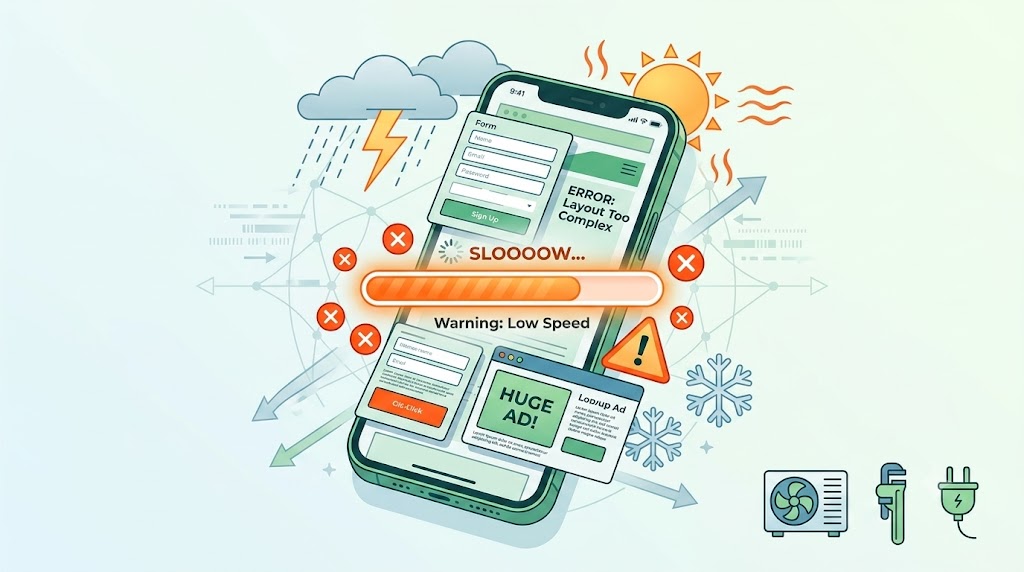
Page speed is an important mobile-first indexing ranking signal. Slow pages generate poor user experiences, increasing bounce rates and converting fewer visitors. Time is of the essence for home service professionals. If your mobile page takes more than three seconds to load, customers may leave. Optimize for speed by compressing images, enabling browser caching, and reducing redirects. Google’s PageSpeed Insights tool helps identify areas to optimize. A site that loads fast maximizes your SEO performance and keeps potential clients around.
5. Mobile SEO and UX Success
Mobile-first indexing by Google gives importance to sites that have good user experiences. These consist of user-friendly navigation, prominent call-to-action (CTA) buttons, and font sizes that can be easily read. Home service websites must plan with small screens. Make your contact forms, service pages, and schedule buttons mobile-friendly. A smooth user experience not only improves your rankings but encourages users to take action—whether it’s calling for service or completing a quote form.
6. Mobile-Optimized Content: The Key to Better Rankings
Content is the key to better rankings under mobile-first indexing. Google favors sites full of quality, relevant content that is accessible by cell phones. To home service businesses, that translates into writing for scannability in terms of short sentences, bullet points, and headings that define them. Use schema markup to come across stronger in rich snippets. Use location-based keywords organically to catch location searches. Maintaining your content concise, interesting, and in good structure ensures readability and maximizes SEO strength.
7. Responsive Design vs. Standalone Mobile Sites
Responsive web design is the gold standard of mobile-first indexing. It automatically adjusts your site to varying screen sizes and provides a consistent experience on devices. Mobile sites with separate URLs (m.example.com) have the potential to introduce inconsistencies in content and SEO performance. Responsive design also assists home service companies since it simplifies maintenance and minimizes the risk of duplicate content problems. One responsive website informs Google that your content is optimized for everyone, which improves your rankings.
8. Actionable Tips to Optimize Your Website
Home service companies should prioritize mobile optimization to succeed in 2025’s mobile-first SEO environment. Begin by checking your site’s mobile-friendliness with Google’s Mobile-Friendly Test. Improve loading speeds with image compression and minimal code. Employ large, tappable buttons for convenience. Make sure your contact information is large and clickable. Lastly, use local SEO strategies like Google Business Profile optimization and including customer reviews to boost mobile search visibility.
Conclusion:
Mobile-first indexing is no longer a trend but rather the norm of SEO in 2025. For home service companies, you must have a mobile site in order to generate leads, obtain top local search rankings, and beat your competitors. With an emphasis on mobile-first design, quick page loading, and smooth user experiences, you will be assured of having a strong online presence. By adopting mobile-first SEO practices, you will be setting your business up for long-term success and growth.
Do you want to dominate local search results and attract more customers in 2025? Optimize your home service website for mobile-first indexing today. Contact our SEO experts at Grow Nearby for a free consultation, and let us help you boost your online visibility and generate more leads.