



Introduction:
Local search is no longer limited to typing keywords into Google. Today, people speak to their phones and receive summarized answers powered by artificial intelligence, changing how businesses appear in search results. Voice search and AI Overviews may seem similar on the surface, but they work very differently behind the scenes.
For local SEO, understanding these differences is critical because each format pulls data in unique ways. Businesses that optimize for only one risk are missing visibility opportunities. Knowing how voice assistants and AI-generated summaries interpret local information helps shape smarter SEO strategies.
What Voice Search Really Is and How It Works
Voice search allows users to ask questions aloud using assistants like Google Assistant, Siri, or Alexa. These systems rely heavily on natural language processing to understand conversational queries and deliver quick, spoken answers. Most voice searches are intent-driven and often include location-based phrases such as “near me” or “open now.”
For local SEO, voice search prioritizes concise, accurate business data. Listings with clear addresses, hours, and services are more likely to be selected. The assistant usually pulls from featured snippets, Google Business profiles, and structured website content.
Understanding AI Overviews in Search Results
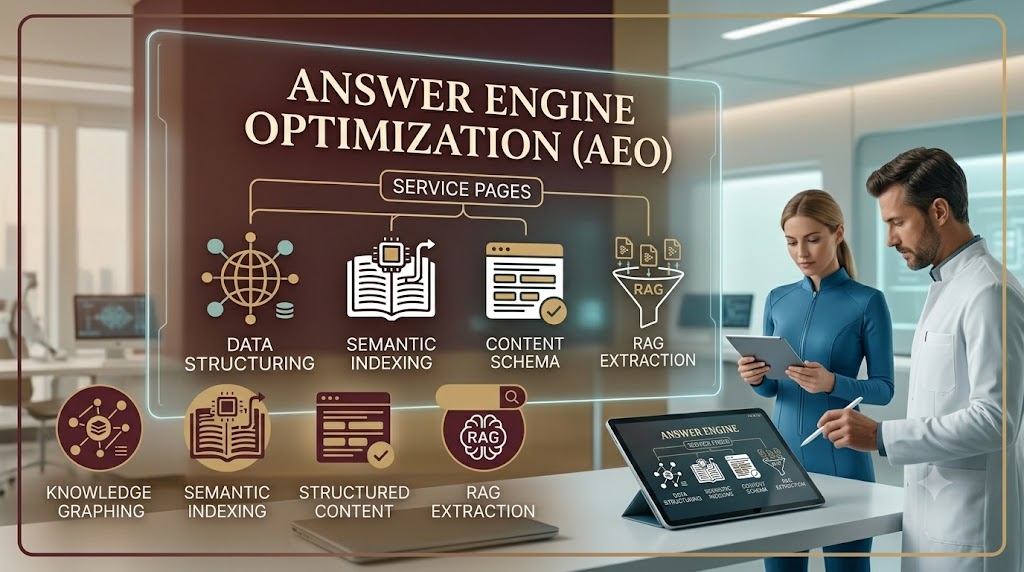
AI Overviews are AI-generated summaries that appear at the top of search results for certain queries. Instead of listing individual links first, Google synthesizes information from multiple sources into one comprehensive response. These overviews aim to answer complex or informational queries quickly.
For local searches, AI Overviews may reference businesses, services, or locations without directly ranking them in the traditional sense. Visibility depends on how clearly your website content explains services, relevance, and local context. Strong topical authority plays a major role here.
Query Style Differences Between Voice Search and AI Overviews
Voice search queries are typically longer and more conversational. Users speak as they would to another person, asking direct questions rather than typing fragmented keywords. This means local SEO must account for full-sentence phrasing and question-based content.
AI Overviews, however, respond to both short and long queries. They focus more on intent depth than phrasing style. Well-structured pages that explain topics thoroughly are more likely to be referenced in AI-generated summaries.
How Local Intent Is Interpreted in Each Format
Voice search has a strong local intent bias. Many voice queries are immediate, such as finding a nearby service or checking business hours. Because of this, proximity, relevance, and accurate local listings are crucial ranking factors.
AI Overviews interpret local intent more broadly. They may provide explanations, comparisons, or guidance before recommending local options. Businesses appear when their content aligns clearly with the user’s problem and geographic context.
5. The Role of Google Business Profiles
For voice search, Google Business Profiles are extremely influential. Assistants often pull answers directly from these profiles, especially for directions, contact details, and operating hours. Inconsistent or incomplete listings reduce the chance of being selected.
AI Overviews rely less directly on business profiles and more on website content. However, profile data still helps confirm legitimacy and location accuracy. When both website and profile information align, trust signals are stronger.
6. Content Structure and Optimzization Differences
Voice search favors short, direct answers. Pages with clear headings, FAQs, and schema markup perform better because assistants can easily extract answers. Content should sound natural and conversational without sacrificing accuracy.
AI Overviews reward depth and clarity. Longer-form content that explains services, benefits, and processes in detail performs well. Well-organized sections help AI understand context and pull relevant insights into summaries.
7. Visibility and Click Behavior Impacts
Voice search often results in zero-click interactions. Users receive the answer verbally and may never visit a website, which makes brand recall more important than clicks. Being the chosen answer builds trust and recognition over time.
AI Overviews may reduce traditional clicks but still influence user decisions. Some users scroll past the overview for more detail, while others rely on the summary alone. Appearing in these summaries positions your business as an authority even without immediate traffic.
8. Measuring Success for Voice Search vs AI Overviews
Tracking voice search performance is challenging because there is no direct reporting metric. Success is often measured through increases in local calls, direction requests, and branded searches. Improvements in Google Business Profile engagement are key indicators.
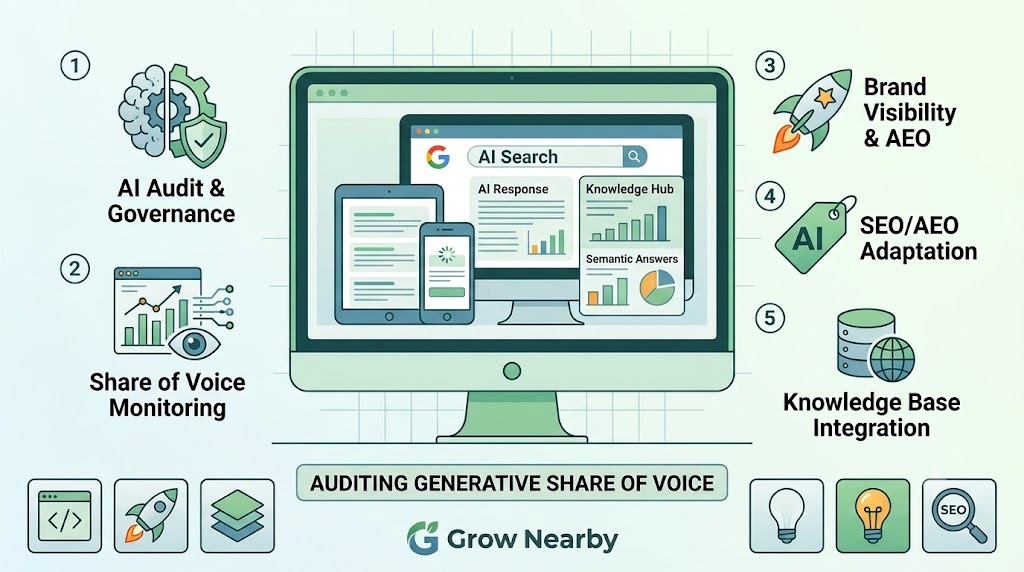
AI Overview visibility is measured indirectly through impressions, branded traffic, and overall search presence. Content that earns visibility in overviews often shows growth in topical rankings. Monitoring long-term trends matters more than short-term clicks.
Conclusion
Voice search and AI Overviews serve different purposes, but both shape the future of local SEO. Voice search emphasizes immediacy, accuracy, and proximity, making local listings and conversational content essential. AI Overviews focus on context, depth, and authority, rewarding businesses that explain their services clearly and comprehensively.
Local SEO success now depends on balancing both approaches. Businesses that optimize for structured data, natural language, and high-quality content are best positioned to win visibility across evolving search formats.